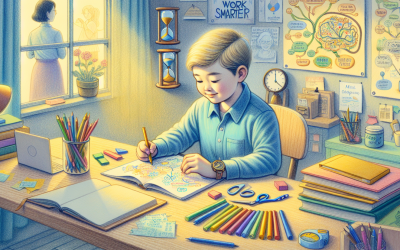
Understanding the Concept of a Growth Mindset
The Foundations of a Growth Mindset
A growth mindset revolves around the belief that abilities and intelligence can be developed through dedication, hard work, and input from others. This concept, pioneered by psychologist Carol Dweck, contrasts with a fixed mindset, where individuals perceive talents as static, unchangeable traits. According to Dweck, embracing a growth mindset cultivates resilience and persistence in the face of challenges (Mindset Works).
It’s crucial to understand that having a growth mindset doesn’t simply mean pushing through challenges. Instead, it involves recognizing and valuing the learning process, striving for improvement, and viewing setbacks as pathways to mastery. As Dr. Dweck states, “Individuals who believe their talents can be developed (through hard work, good strategies, and input from others) have a growth mindset.”
The Psychological Benefits of Adopting a Growth Mindset
Embracing a growth mindset is not only beneficial for intellectual development but also for emotional resilience. Gifted children, often accustomed to excelling easily, may feel pressured by the expectations placed upon them. A growth mindset helps alleviate this pressure by shifting the focus from inherent talent to continuous learning and improvement.
Research has shown that students with a growth mindset are more likely to seek out challenges and recover more effectively from failures. Psychologist Angela Duckworth, known for her work on grit, emphasizes the power of a growth mindset: “Effort counts twice—effort builds skill, and at the same time, effort makes skill productive over time.” By encouraging children to value effort over innate ability, we bolster their endurance through life’s inevitable setbacks (Duckworth et al., 2007).
Practical Steps for Parents to Foster a Growth Mindset
Parents play a pivotal role in helping their gifted children develop a growth mindset. Here are some actionable tips:
- Praise the Process, Not the Person: Instead of commending your child for being “smart,” acknowledge their hard work and perseverance. For example, say, “I’m proud of how you tackled that problem,” which reinforces effort over innate ability.
- Encourage a Love of Learning: Introduce your child to activities that involve manageable risks and potential failure, such as learning a new instrument or engaging in team sports. This builds resilience and an appreciation for the learning journey.
- Model Growth Mindset Language: Use phrases like “I can’t do this yet,” which highlight the potential for growth. Demonstrating your own process of learning and overcoming obstacles sets a strong example.
- Read Together: Choose books that feature characters who strive to improve themselves despite difficulties. Stories can be powerful tools in illustrating the principles of a growth mindset in an engaging way.
By actively cultivating these approaches, parents can help their gifted children not only enhance their intellectual capacities but also build the tenacity required to navigate the complexities of life.
The Role of Parents in Modeling Resilience
Understanding Parental Influence on Resilience
Parents play a crucial role in shaping their children’s ability to navigate challenges, especially when it comes to gifted children who often face unique pressures and expectations. It’s important for parents to recognize that their own behaviors and attitudes significantly influence their child’s development of resilience. As Dr. Carol Dweck, a renowned psychologist known for her work on mindset, suggests, “Children learn a lot from what we do. If they see us facing difficulties with determination and a positive attitude, they are likely to adopt the same approach” (Mindset Works).
Demonstrating a Growth Mindset Through Actions
One of the most effective ways parents can model resilience is by embracing a growth mindset themselves. This involves viewing failures as opportunities to learn and grow rather than as signs of inadequacy. By doing so, parents teach their children the value of persistence and adaptability. Consider implementing these actionable tips:
- Be Vocal About Your Challenges: Share your own struggles and how you overcome them. This transparency shows children that encountering problems is a normal part of life.
- Celebrate Effort, Not Just Success: Emphasize the importance of effort and learning over simply winning or achieving perfect outcomes. Praise your child not only for their successes but also for their hard work and perseverance.
- Encourage Problem-Solving: Rather than immediately providing solutions, encourage your child to think critically and develop their own strategies for overcoming obstacles.
Nurturing Emotional Support and Empathy
Gifted children, like all children, need emotional support to build resilience. According to Dr. Angela Duckworth, author of “Grit: The Power of Passion and Perseverance,” emotional understanding and empathy from parents enable children to manage their emotions effectively, which is key to resilient behavior (Angela Duckworth).
To foster an environment rich in emotional support, consider the following:
- Create a Safe Space for Open Dialogue: Allow your child to express their feelings without fear of judgment. Regular, open conversations about emotions help children feel understood and supported.
- Practice Active Listening: Show genuine interest in your child’s concerns and actively listen to their experiences. Reflect back what they say to demonstrate understanding and empathy.
- Model Positive Coping Strategies: Demonstrate healthy ways to handle stress and adversity, such as mindfulness, exercise, or creative outlets, and encourage your child to explore these techniques.
By actively engaging in these practices, parents can significantly contribute to their gifted child’s resilience, helping them transform challenges into opportunities for growth.
How a Growth Mindset Encourages Perseverance
Understanding the Growth Mindset
The concept of a growth mindset, introduced by psychologist Carol Dweck, refers to the belief that abilities and intelligence can be developed with effort and perseverance. In contrast to a fixed mindset, which assumes these traits are static, a growth mindset encourages children to embrace challenges and view failures as opportunities for growth. According to Dweck, “When children believe they can develop their abilities, they have a love for learning and a resilience that is essential for great accomplishment” (source).
Gifted children, who often experience early success, may develop a fixed mindset, leading them to shy away from difficult tasks for fear of failure. Encouraging a growth mindset helps them understand that effort and perseverance are key components of mastery.
Building Resilience Through Challenging Experiences
Children who adopt a growth mindset tend to show greater resilience in the face of adversity. Perseverance, an essential aspect of resilience, is fostered when children learn to view difficulties as part of the learning process rather than as insurmountable obstacles. Louise Parker, an educational psychologist, states, “It’s about teaching children that struggling with a problem doesn’t mean they’re not smart. It means they are stretching and expanding into new knowledge” (source).
Parental Support Tips:
- Model a Growth Mindset: Demonstrate how you handle challenges at work or home. Express your own struggles positively and show how you learn from mistakes.
- Praise Effort, Not Talent: Instead of focusing on innate ability, acknowledge your child’s hard work and determination.
- Set Incremental Goals: Break tasks into manageable steps to show progression and build confidence through small achievements.
Encouraging a Love for Lifelong Learning
A growth mindset not only bolsters perseverance but also cultivates a lifelong love for learning. Children who focus on the process of learning, rather than the end result, are more likely to remain curious and open-minded well into adulthood. Celebrating curiosity and inquiry over perfection teaches gifted children that learning is a never-ending journey.
In her book, Mindset: The New Psychology of Success, Dweck emphasizes, “The passion for stretching yourself and sticking to it, even (or especially) when it’s not going well, is the hallmark of the growth mindset” (source). This attitude can help gifted children tackle complex topics with enthusiasm and resilience, knowing that setbacks are merely stepping stones to deeper understanding.
Teaching Children to Embrace Failures as Learning Opportunities
Understanding the Value of Failure
For gifted children, who often experience early success in academic or creative pursuits, encountering failure can be particularly challenging. It is crucial to help them understand that failure is a natural part of the learning process. By reframing failures as valuable experiences, children can be encouraged to see them as opportunities for growth rather than setbacks. Psychologist Carol Dweck, known for her work on the “growth mindset,” emphasizes that “the view you adopt for yourself profoundly affects the way you lead your life” (Dweck, 2007). This perspective empowers children to embrace challenges and persist despite difficulties.
Encouraging a Growth-Oriented Perspective
Parents and educators play a vital role in fostering a growth-oriented perspective in children. It’s essential to praise effort, strategies, and progress rather than innate ability. For instance, instead of saying “You’re so smart,” consider saying “I’m impressed by how hard you’ve worked on this.” This subtle shift in language encourages children to appreciate their efforts and resilience.
Actionable Tips:
- Model Resilience: Share your own experiences of failure with your child and discuss what you learned from them.
- Focus on Effort: Highlight the importance of persistence and effort by setting goals together that prioritize improvement over perfection.
- Celebrate Mistakes: Create an environment where mistakes are not only accepted but celebrated as opportunities for learning. Consider having a “mistake of the week” discussion where family members share a mistake and what they learned from it.
Creating a Supportive Environment
Building a supportive environment requires both emotional and practical support. Children should feel safe and encouraged to take risks without fear of harsh criticism or judgment. Educational psychologist Joanne Foster suggests that environments filled with understanding and empathy can enhance children’s resilience and willingness to engage with challenging tasks (Foster, 2014).
Ways to Create a Supportive Environment:
- Provide Unconditional Support: Let children know that your love and support are not dependent on their achievements but on their effort and dedication.
- Encourage Reflective Practices: Encourage children to reflect on their experiences by keeping a journal where they can document challenges and problem-solving strategies.
- Facilitate Problem Solving: Guide children through problem-solving steps rather than offering immediate solutions, helping them build confidence in their abilities to overcome obstacles.
In nurturing resilience among gifted children, it is imperative to teach them that failures are not definitive end points but integral parts of the path to success. By adopting a growth mindset, children can learn to value perseverance, adaptability, and lifelong learning.
Influence of Resilience on Problem-Solving Skills
The Relationship Between Resilience and Cognitive Flexibility
Resilience plays a crucial role in enhancing cognitive flexibility, a key component of problem-solving skills. According to Dr. Karen Reivich, a renowned psychologist and co-director of the Penn Resilience Program, “Resilient individuals are better equipped to adapt their thinking processes to suit new situations, which is vital for effective problem-solving,” (source). Gifted children, despite their advanced intellectual abilities, can benefit significantly from resilience as it allows them to navigate challenges with a more open and adaptive mindset.
Through resilience, children learn to see multiple solutions to a problem, rather than fixating on a single answer. This adaptability fosters creativity and innovation, enabling gifted children to explore diverse perspectives and alternative strategies when confronted with complex problems.
Building Emotional Resilience to Enhance Problem Solving
Emotional resilience is also a critical factor that influences how well children can tackle problems creatively and efficiently. Emotional intelligence, which encompasses the ability to understand and manage one’s emotions, helps children maintain focus and clarity when solving problems. Dr. Lisa Damour, a clinical psychologist, emphasizes that “Resilient children are better at regulating their emotions, which prevents stress from overwhelming their cognitive functions during problem-solving tasks,” (source).
To support the development of emotional resilience in gifted children, parents and educators can:
- Encourage open communication: Create an environment where children feel safe to express their concerns and fears without judgment.
- Model emotional regulation: Demonstrate healthy ways of coping with stress and setbacks.
- Promote mindfulness practices: Introduce techniques such as deep breathing or meditation to help children stay calm and focused.
Strategies to Cultivate Resilient Problem Solvers
Fostering resilience in gifted children can lead to more effective problem-solving skills. Here are some actionable tips for parents:
- Encourage a growth mindset: Help children view challenges as opportunities for growth rather than threats to their intelligence. Praise effort over innate ability.
- Provide challenging tasks: Regularly offer tasks that stretch children’s problem-solving abilities without overwhelming them. These should be slightly beyond their current skill level.
- Teach problem-solving frameworks: Introduce structured approaches, such as brainstorming, root-cause analysis, or mind-mapping, to organize their thoughts systematically.
- Celebrate failures as learning experiences: Reinforce that failure is a natural part of the learning process and an essential step towards mastering new concepts.
By implementing these strategies, parents and educators can significantly enhance the problem-solving capabilities of gifted children through the nurturing of resilience, preparing them for the complex challenges of the future.
Practical Strategies for Parents to Foster a Growth Mindset
Encouraging a Love for Learning
One of the most effective ways for parents to foster a growth mindset in their children is by cultivating an intrinsic love for learning. Encourage your child to view challenges as opportunities to grow rather than obstacles to avoid. Reinforce the idea that intelligence is not fixed, but rather adaptable through effort and perseverance.
Actionable Tips:
- Model Curiosity: Demonstrate your own eagerness to learn by exploring new topics or skills alongside your child.
- Praise Effort, Not Talent: When praising your child, focus on their hard work and dedication rather than inherent ability. For example, say “I’m proud of how hard you worked on this project” instead of “You’re so smart.”
- Provide Diverse Experiences: Introduce your child to a variety of subjects and activities to ignite curiosity and reveal different strengths.
Helping Children Embrace Mistakes
Teaching children to regard mistakes as valuable learning experiences is critical in developing a growth mindset. This perspective allows gifted children to see failures as a natural part of the learning journey rather than definitive setbacks.
Dr. Carol Dweck, a leading psychologist in the field of motivation, states, “The view you adopt for yourself profoundly affects the way you lead your life.” (Dweck, 2015). Empowering children with this understanding helps them become resilient learners.
Actionable Tips:
- Discuss Mistakes Openly: Engage in conversations about famous inventors, scientists, or artists who faced numerous failures before achieving success.
- Encourage Risk-Taking: Create a safe environment at home where experimentation and taking calculated risks are encouraged.
- Normalize Setbacks: Share stories of times when you faced failures and how those experiences contributed to your personal growth.
Building Perseverance and Resilience
Resilience can be nurtured by helping children develop perseverance. By equipping them with strategies to manage adversity, parents can empower gifted children to tackle challenges with confidence and determination.
Expert Opinion: According to Angela Duckworth, author of “Grit: The Power of Passion and Perseverance”, “Enthusiasm is common. Endurance is rare.” Perseverance combined with passion is crucial for long-term achievement (Duckworth, 2016).
Actionable Tips:
- Set Incremental Goals: Break down large tasks into manageable steps and celebrate small victories along the way.
- Reflect on Progress: Encourage regular reflection sessions where children can assess their progress and adjust their strategies.
- Promote Problem-Solving: Foster independent thinking by allowing children to come up with solutions to their own challenges with guidance when needed.
The Long-Term Benefits of Resilience in Gifted Learners
The Role of Resilience in Academic Success
Gifted learners who develop resilience are more likely to experience sustained academic success. Resilience enables these students to navigate the challenges of advanced curriculum and high expectations without succumbing to stress or burnout. According to Dr. Carol Dweck, author of Mindset: The New Psychology of Success, fostering a growth mindset—a belief that abilities can be developed through dedication and hard work—plays a significant role in building resilience. She says, “When people believe that their basic qualities can be developed, failures may still hurt, but failures don’t define them.” This perspective is crucial for gifted learners who face challenges that require them to step out of their comfort zones.
Parents and educators can promote resilience by encouraging students to set realistic goals and view setbacks as opportunities for learning. By continually prioritizing the process of learning over the final outcome, gifted students come to understand the value of effort and persistence.
Emotional Well-being and Social Skills
Beyond academics, resilience contributes significantly to the emotional well-being and social competence of gifted children. These learners often encounter unique social and emotional challenges due to asynchronous development and high sensitivity to their environment. Building resilience helps them manage emotions effectively and develop strong social skills, enabling them to form positive relationships with peers and teachers.
Recognized child psychologist Dr. Mary-Ellen Sanders emphasizes that resilient children tend to have a greater sense of self-worth and confidence. She notes, “Resilience doesn’t just help children deal with stress or trauma; it also builds their ability to form and maintain social connections, which is vital for overall well-being.”
To support emotional health and social development:
- Encourage open communication about feelings and experiences.
- Facilitate participation in group activities or team sports to enhance cooperation and empathy.
- Offer guidance on conflict resolution and problem-solving techniques.
Resilience as a Lifelong Skill
The benefits of nurturing resilience extend far beyond childhood. As gifted learners transition into adulthood, the resilience they have developed will be invaluable across various life domains. From pursuing higher education to entering the workforce, they will face numerous situations that demand adaptability and perseverance.
Psychologist and educator Dr. Angela Duckworth, known for her work on grit, asserts that resilience is a key predictor of long-term achievements. Her research demonstrates that the presence of grit—passion and sustained persistence—can be as important, if not more so, than innate talent alone.
Practical ways for parents to reinforce resilience in their children include:
- Modeling Resilience: Demonstrate coping strategies when facing personal challenges.
- Cultivating Autonomy: Allow children to make decisions and learn from their outcomes.
- Providing Constructive Feedback: Focus feedback on efforts and strategies, rather than innate abilities.
For additional insights, consider reading Dr. Duckworth’s book Grit: The Power of Passion and Perseverance.