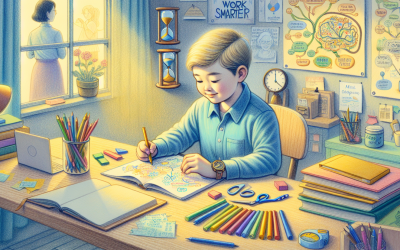
Understanding the Importance of Encouragement in Gifted Children
The Role of Encouragement in Development
Gifted children often have unique emotional and intellectual needs that require special attention from parents and educators. Encouragement plays a pivotal role in nurturing these children’s potentials by supporting their self-esteem and motivation. Gifted children may face unique challenges, such as fear of failure, perfectionism, or feeling different from peers, which can hinder their development if not properly addressed.
According to Dr. Linda Silverman, a psychologist specializing in the needs of gifted children, “[encouragement] is essential for helping gifted children overcome the ‘impostor syndrome’ and realize their own capabilities” (Silverman, 2020). Providing encouragement helps them recognize their talents and builds a solid foundation for pursuing new challenges without fear.
Creating a Supportive Environment
A supportive environment nourishes a gifted child’s creativity and curiosity. Parents and educators can play a key role in creating such an atmosphere. Open communication and active listening are crucial aspects of this process. It is important to encourage children to express their thoughts and feelings without fear of judgment.
Actionable Tips:
- Listen actively: Pay attention to what your child is saying and reflect back what you hear, showing genuine interest.
- Celebrate effort over results: Focus on their efforts rather than the outcome to foster a growth mindset.
- Provide opportunities: Offer various activities and experiences that stimulate curiosity and allow the child to explore new interests.
Balancing Expectations and Encouragement
While it is natural to have high expectations for gifted children, it’s crucial to balance these expectations with realistic encouragement. Pushing children too hard can lead to burnout and anxiety, while too little encouragement may cause them to underachieve. A balanced approach ensures that children are motivated without feeling overwhelmed.
Expert Insight: Dr. Carol Dweck’s research on mindsets highlights the importance of promoting a growth mindset, where children view challenges as opportunities to learn and grow (Dweck, 2017). By encouraging gifted children to embrace challenges and learn from failures, parents can help them develop resilience and a positive attitude towards learning.
Actionable Tips:
- Encourage a balance of activities that are both challenging and enjoyable.
- Provide constructive feedback that focuses on improvement and learning.
- Create a safe space for risks and mistakes, emphasizing that errors are part of the learning process.
For more insights on supporting gifted children, visit National Association for Gifted Children.
Creating a Stimulating Environment for Bright Minds
Designing an Engaging Learning Space
Creating an environment that nurtures the intellectual and creative capacities of gifted children requires intentional design. A learning space should be rich with resources that can stimulate different areas of interest. This means incorporating a variety of materials such as books, art supplies, puzzles, and scientific kits. Dr. Linda Silverman, an expert in gifted education, suggests that “gifted children thrive in environments where they have access to complex and enriching materials that challenge their thinking.”
Tips for Parents:
- Organize the space with accessible shelves filled with a variety of topics to encourage exploration.
- Include a comfortable area for reading and reflection, allowing for quiet contemplation amid exploration.
- Use multi-sensory materials to engage different learning styles, such as tactile puzzles or auditory story tapes.
Nurturing Intellectual Curiosity
Gifted children often exhibit a deep desire to understand the world around them. Encouraging this natural curiosity can lead to more profound learning experiences. Allowing children to pursue topics of interest at their own pace fosters a deeper engagement and understanding. Renowned psychologist Carol Dweck advocates for a growth mindset, emphasizing that “when children are challenged by what fascinates them, they grow intellectually.”
Here are some ways to nurture this curiosity:
- Foster Inquiry: Encourage your child to ask questions and seek answers through research projects, experimentation, or by talking with experts in the field.
- Connect with Community Resources: Visit museums, science centers, and libraries. Many institutions offer programs specifically designed for gifted learners.
- Introduce Educational Technology: Utilize educational platforms and apps that offer advanced content and interactive learning opportunities. Websites like Khan Academy provide free resources suited for advanced learners.
Encouraging Collaborative Learning
While individual study is crucial, gifted children also benefit from interacting with peers who share their interests and abilities. Collaborative learning can develop social skills and enhance creativity through shared perspectives. Educator Dr. Joseph Renzulli emphasizes the importance of group work, stating, “Collaboration is a catalyst for innovation, where students can exchange and expand upon each other’s ideas.”
Ideas to Promote Collaboration:
- Enroll your child in local clubs or workshops that align with their interests, whether it’s robotics, writing, or theatre arts.
- Facilitate group projects in areas such as science experiments or constructing models to promote teamwork and problem-solving.
- Encourage participation in online forums or communities where children can discuss topics with peers worldwide, broadening their horizons.
By thoughtfully curating the physical and intellectual environment, parents and educators can create spaces that not only nurture but also inspire the brilliance of gifted children.
Incorporating Play and Exploration into Learning
Embracing Play as a Learning Tool
Gifted children often possess an innate curiosity that can be nurtured through play. Play is not just downtime from serious learning; it’s a crucial part of the educational process, especially for gifted kids who thrive on exploration and discovery. According to Dr. Peter Gray, a psychologist and author of Free to Learn, “Play is nature’s way of teaching children how to solve their own problems, control their impulses, and be resilient in times of failure.” (source)
Well-structured play activities can stimulate intellectual growth and creativity. For instance, instead of structured tasks like coloring within the lines, provide children with blank canvases and a variety of art supplies. This freedom encourages them to experiment and innovate.
Encouraging Curiosity Through Exploration
Gifted children often show a remarkable ability to dive deep into subjects of interest. Providing diverse opportunities for exploration can help satisfy and fuel their curiosity. Field trips to science museums, art galleries, or natural parks serve not only as enjoyable excursions but also as rich educational experiences where children can learn beyond textbooks.
Actionable Tips:
- Create a “Discovery Zone” at home: Designate a space with materials such as books, puzzles, building blocks, and electronics kits that your child can explore freely.
- Encourage questions: Foster an environment where all questions are welcomed. Use open-ended questions to nudge them to think critically and deeply about the world around them.
Implementing Technology and Interactive Learning
Incorporating technology into learning can provide gifted children with new ways to explore their interests. Interactive apps and educational games can offer tailored challenges that adapt to your child’s level, keeping them engaged.
Expert Opinion: Lisa Maccarone, a specialist in gifted education, suggests that parents should “look for interactive tools and apps that offer levels of complexity and user control, as these can help meet the unique needs of highly able learners.”
Practical Suggestions:
- Use educational apps: Seek out apps and online resources that align with your child’s interests and expand their knowledge.
- Blend technology with hands-on activities: Combine virtual and physical elements, such as using a tablet to guide a DIY science project or a coding app to program a small robot.
By incorporating these strategies, parents and educators can make learning a more dynamic and fulfilling experience for gifted children.
Encouraging Questions and Critical Thinking
Promoting an Inquisitive Mindset
Encouraging gifted children to ask questions and think critically is essential for their intellectual and personal development. As Dr. Carol Dweck, a renowned psychologist, explains in her book Mindset: The New Psychology of Success, fostering a growth mindset is crucial. When children believe that they can develop their abilities through effort and inquiry, they are more likely to embrace challenges and persist through difficulties.
One effective way to promote an inquisitive mindset is by creating a safe environment where children feel comfortable expressing their curiosity. Encourage them to ask open-ended questions that cannot be answered with a simple ‘yes’ or ‘no’. For example, instead of asking “Did you like the book?” try “What did you find most interesting about the book?”
Building Analytical Skills
Critical thinking involves analyzing information, evaluating evidence, and making reasoned conclusions. According to educational expert Dr. Robert J. Sternberg, developing these skills at an early age can significantly enhance a child’s ability to solve complex problems. In his research, he emphasizes the importance of teaching children to differentiate between facts and opinions, assess arguments, and recognize biases.
Here are some actionable tips to help build your child’s analytical skills:
- Encourage debates on various topics and allow your child to form and defend their opinions.
- Introduce logic games and puzzles that challenge their reasoning and problem-solving abilities.
- Cultivate media literacy by discussing news articles or documentaries, helping them discern credible sources from misleading ones.
Nurturing Independent Thought
Gifted children often thrive when given the opportunity to pursue their interests independently. Support their intellectual autonomy by providing resources that allow them to explore topics deeply. Encourage them to come up with hypotheses and test them through experiments or projects.
By allowing children the freedom to explore, they learn how to approach problems creatively and independently. As Sir Ken Robinson notes in his TED Talk on creativity, “We need to educate our children’s whole being so they can face this future.” This full approach to education ensures that children not only absorb information but also synthesize it innovatively.
Parents and educators can play a crucial role in nurturing independent thought by:
- Providing diverse materials, such as books, videos, and kits related to their interests.
- Setting aside regular time for unstructured exploration, where children can follow their curiosity without a predetermined outcome.
- Encouraging reflection by having discussions on what they learned or discovered independently.
By integrating these strategies into everyday interactions, parents and educators can greatly enhance gifted children’s question-asking skills and critical thinking capabilities, equipping them with tools essential for lifelong learning and adaptation.
Using Technology as a Tool for Creative Growth
Embracing Digital Tools for Artistic Expression
In the contemporary landscape, digital tools provide gifted children with a vast array of opportunities to express their creativity. Software programs such as Adobe Creative Cloud or Apple’s Procreate offer platforms where young minds can explore digital painting, drawing, and even animation. These tools not only expand the traditional boundaries of art but also allow for immediate feedback and iteration, fostering an environment of continuous creative growth.
Expert Anna Craft, a renowned educational psychologist, emphasizes that digital creativity can significantly enhance problem-solving skills and resilience in children. In her article, “Creativity for 21st Century Competence: The Role of Creativity in Education”, Craft notes that “engaging with digital media enables young learners to configure their digital habitats in ways that are personally meaningful, thus nurturing creativity and individual expression.”
Actionable Tips:
- Set up a digital art station with a tablet and stylus if possible.
- Encourage your child to explore free online tutorials on platforms like YouTube or Skillshare.
- Allow them to collaborate with peers on digital projects, promoting teamwork and the integration of multiple creative ideas.
Leveraging Coding as a Creative Outlet
Coding is more than just writing lines of code; it is a modern form of storytelling and a craft that combines logic with imagination. By learning to code, gifted children can construct their own games, websites, and applications, transforming their creative ideas into tangible realities. Platforms like Scratch, developed by the MIT Media Lab, provide an accessible entry point for young coders to start building interactive stories, games, and animations.
According to Mitch Resnick, a professor of Learning Research at MIT, coding can be viewed as a “new literacy”, empowering children to think creatively and reason systematically. In his TED talk (link), Resnick asserts, “When you learn to code, you learn new ways of expressing yourself and solving problems.”
Actionable Tips:
- Enroll your child in introductory coding courses designed for young learners on platforms like Khan Academy or Code.org.
- Encourage them to participate in coding competitions or hackathons that focus on creative problem-solving.
- Celebrate their projects by showcasing them to friends and family, which can boost their confidence and passion for their work.
Balancing Screen Time with Diverse Creative Activities
While technology offers significant avenues for creative expression, maintaining a balanced approach is crucial. Over-reliance on screen-based creativity can lead to a narrowed experience of the world. Parents and educators should foster a diverse range of activities that include both digital and analog experiences to ensure well-rounded development.
Educational expert Sir Ken Robinson advocates for a balanced educational ecosystem, where technology complements rather than dominates learning processes. In his book, Creative Schools: The Grassroots Revolution That’s Transforming Education, Robinson argues that creativity in education requires diversity not just in subject matter but in the media through which children learn and express themselves.
Actionable Tips:
- Incorporate offline creative activities, such as crafting, journaling, or playing musical instruments.
- Establish family media guidelines that prioritize quality over quantity in screen time usage.
- Create a technology-free zone to encourage unplugged creativity and face-to-face interactions.
By integrating these strategies, parents and educators can harness technology as a powerful tool to stimulate and nurture the innate curiosity and creativity found in gifted children.
Balancing Structured and Unstructured Activities
Understanding the Needs of Gifted Children
Gifted children often exhibit a heightened ability to process information and a deep-seated curiosity about the world around them. This intrinsic motivation to learn and explore necessitates a delicate balance between structured and unstructured activities. While structured activities, such as classes and organized sports, provide clear learning objectives and skill development, unstructured play offers the freedom to experiment, imagine, and innovate.
Psychologist Dr. Ellen Winner notes that “gifted children require both challenges and freedom to thrive.” Structured environments can build discipline and perseverance, but too much rigidity might stifle creativity. To truly foster a gifted child’s potential, it’s crucial to integrate unstructured time that allows them to explore their interests organically.
The Benefits of Structured Activities
Structured activities are essential in developing specific skills and knowledge bases. They provide kids with a sense of accomplishment and help in honing particular talents. Music lessons, for example, can teach discipline and foster an appreciation for rhythm and harmony, while science clubs might deepen a child’s interest in experimentation and empirical thinking.
- Skill Development: Structured environments help children develop expertise in areas like mathematics, science, or the arts.
- Goal Orientation: Regularly participating in structured activities helps children learn to set and achieve goals.
- Social Skills: These environments often involve team settings, which encourages collaboration and communication.
Yet, it is vital to avoid over-scheduling. As educational psychologist Joan Freeman suggests, “Children need time for idle thought and daydreaming, which are very important for creativity.”
Incorporating Unstructured Play
Unstructured play serves as a necessary counterbalance to structured activities. It is during free play that gifted children can exercise their imagination, try new things without fear of failure, and engage in independent thought.
- Encourage Exploration: Allow your child to delve into activities like drawing, building with blocks, or nature walks, where they can investigate at their own pace.
- Limit Screen Time: Encourage activities that don’t involve screens to stimulate creative thinking and physical exploration.
- Offer Diverse Materials: Provide access to varied resources, such as art supplies or building kits, to inspire creativity and innovation.
Educational strategist Ken Robinson emphasizes that “creativity is as important now in education as literacy, and we should treat it with the same status.” Allowing room for unstructured play is one way parents and educators can nurture this creativity. Explore more on creativity in education.